

Should I End My Friendship? Why This Quiz Might Give You the Clarity You Need
You stare at your screen, draft a text message, and immediately delete it because the interaction feels completely exhausting. If you are wondering should I end my friendship, you need clear signs to help you make this painful decision. This guide helps you evaluate if your platonic bond is worth saving or if you need to let go completely. We cover the biggest red flags, provide a simple quiz, and show you exactly what steps to take next. By the end, you will know how to handle the situation with absolute clarity.
Should I End My Friendship? The Uncomfortable Truth
There is a profound guilt that comes with even questioning a close relationship. You lie in bed at 2 AM, replaying a conversation where your best friend dismissed your feelings, and a little voice asks if this bond is actually healthy. Then immediately, another voice jumps in with all the reasons you are a terrible person for even wondering.
I notice that people agonize over romantic breakups for weeks, but questioning a platonic bond feels almost taboo. We analyze romantic relationships with surgical precision, yet friendships often get a pass on that same scrutiny. The fact is that every relationship requires effort, but a healthy dynamic will never leave you feeling constantly drained.
Why You Need a “Should We Still Be Friends” Quiz
Healthy friendships don’t typically have you searching for a bff quiz at midnight. You’re likely looking for permission to trust your instincts. That represents healthy self-awareness rather than disloyalty.
What fascinates me is how we apply the sunk cost fallacy without realizing it. You’ve been close for eight years, so walking away feels wasteful. This friend, a person who stood by you during your 2019 breakup, suddenly feels like an emotional obligation. Past investment doesn’t obligate you to accept present mistreatment. A bank account with deposits from five years ago but constant withdrawals today is still going bankrupt.
Friendship Red Flags: Signs It’s Time to Walk Away
Every connection experiences rough patches. Certain toxic patterns wave directly in your face.
Energy Vampires vs. Genuine Reciprocal Support
Pay attention to how you feel after spending time together. You might feel lighter and recharged, or you might leave the interaction feeling entirely depleted. Healthy connections operate on reciprocal energy exchange. Energy vampires, individuals who constantly drain your emotional reserves, always stay in crisis mode. They demand support but never show up when you need them. You do all the emotional heavy lifting while they just coast along.
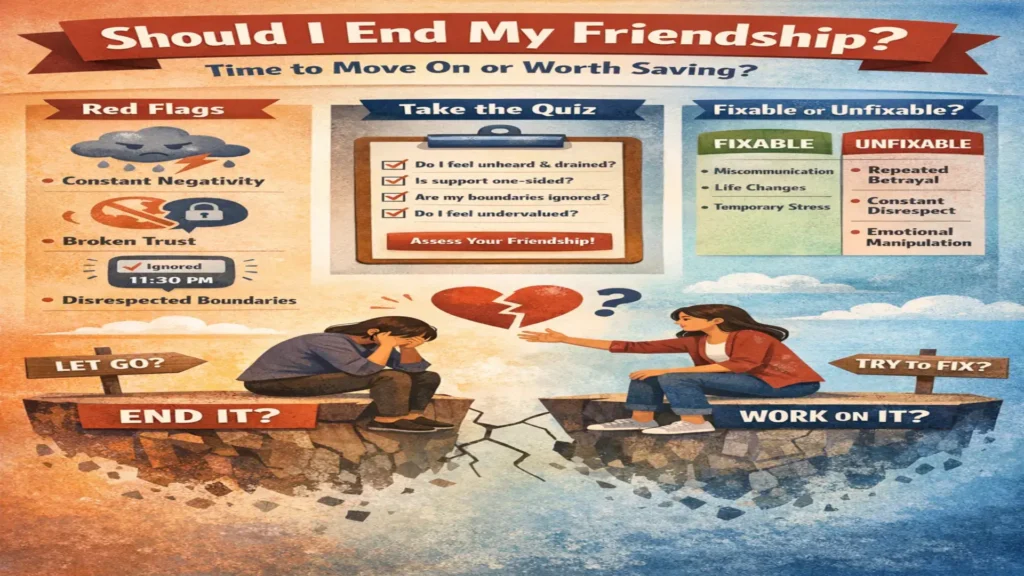
The Respect Test and Boundary Violations
Do they respect your boundaries or treat them like mere suggestions? You state you cannot talk after 10 PM because you need sleep. They call at 11:30 PM just to chat. Boundary violations are respect violations. Someone showing you their wants matter more than your clearly stated needs crosses a major line.
Unfixable Patterns of Broken Trust
Maybe they shared your secrets or talked behind your back. I find that people often forgive the first major breach of trust. If you keep a mental tally of all the times they let you down, your subconscious is screaming that this is no longer a safe space. You need to read the writing on the wall before you get hurt again.
The Ultimate “Should I End My Friendship?” Quiz
Answer these questions with brutal honesty to see where your relationship stands. Focus on patterns rather than one-off arguments.
1. Evaluating Your Communication:
- (a) We rarely disagree; we resolve conflict easily.
- (b) It gets heated, but we talk it out.
- (c) It feels one-sided; I feel unheard.
- (d) We barely communicate; distance is obvious.
2. Measuring Emotional Support:
- (a) I can always count on them for support.
- (b) They show up for major crises, but not everyday struggles.
- (c) I constantly support them, but they aren’t there for me.
- (d) They rarely make me feel genuinely supported.
3. Testing Respect and Boundaries:
- (a) We respect each other’s boundaries and opinions.
- (b) There have been occasional breaches, but we’ve addressed them.
- (c) They often disregard my boundaries and dismiss my opinions.
- (d) I feel generally disrespected and unheard.
4. Analyzing Your Overall Feeling:
- (a) I feel happy and fulfilled in this friendship.
- (b) It’s a mixed bag (good times and bad).
- (c) I feel drained and undervalued.
- (d) This friendship brings more negativity than positivity.
Before You Walk Away: What Is Actually Fixable?
Not every struggling relationship needs to end. Growing pains are completely normal as people evolve. The real question is whether the foundation of mutual respect still exists.
| Fixable Issues | Unfixable Patterns |
|---|---|
| Life changes causing distance | Consistent boundary violations |
| Minor miscommunications | Refusal to acknowledge hurt |
| Schedule and life-stage conflicts | One-sided effort over a long period |
| Temporary external stressors | Broken trust without accountability |
| A need to recalibrate expectations | Emotional manipulation |
The litmus test involves proposing a specific solution. A specific solution should be proposed to test their willingness to try. If they are receptive and follow through, you’re experiencing fixable growing pains. If they get defensive, you have your answer.
What to Do After Taking the Friendship Quiz
You finished the evaluation. Now what?
The Slow Fade vs. The Official Breakup
You might decide on a slow fade rather than a dramatic confrontation. You slowly reduce your contact, become less available on weekends, and watch the relationship naturally dissolve over time. Not every platonic breakup needs an official conversation. Sometimes ties just fade when you stop forcing them.
How to Save a Friendship Worth Keeping
It’s time for a real conversation if you want to fix things. Avoid a vague chat about hanging out more. Have a vulnerable discussion about what needs to change. Your concerns must be stated clearly without using accusatory language. If they genuinely listen and make visible efforts to change, the bond can become much stronger.
FAQ: Should I End My Friendship?
Today, we will answer the most pressing questions about testing a friendship. Here are the comprehensive details:
Moving Forward: Should I End My Friendship?
Staying in a draining or toxic friendship out of obligation doesn’t serve you. It honestly doesn’t serve them either. Whether your results pointed toward ending things or working through issues, honesty is paramount.
You can choose friends who make you feel valued. Sometimes the bravest thing you can do is let go. Only you know which path is right.


