

Using Friendship Quizzes as a Tool of Communication, Not Competition
I’ll admit it: the first time a friend sent me one of those “How well do you know me?” quizzes, I got weirdly competitive about it. I wanted to ace it, to prove I was the best friend. When I scored an 8 out of 10, I felt this strange mixture of pride and mild panic about those two questions I’d gotten wrong. Looking back, I completely missed the point.
And it’s true: friendship quizzes (better put, bestie quizzes, BFF quizzes, or just friend quizzes) have, in fact, grown into this big thing, especially on the internet. They’re everywhere, from Instagram stories to dedicated quiz apps. But here’s the thing that I have found out: we have converted them into scorecards instead of what they actually could be: doorways to better conversations. It shouldn’t be the number at the end that dictates your friendship. Instead, these quizzes can reveal the gaps in what you know about each other and give you something real to talk about.
Ever felt that twinge of anxiety waiting for the quiz results, or have ever judged a friendship based on a percentage? This is for you. Let’s talk about using the quizzes the way they are meant to be used: as tools for connection, not competition.
Why Friendship Quizzes Have Become So Popular
It’s not a coincidence that the friendship quiz is on the rise. There’s something really human about wanting to quantify how well we know the people we care about.
The Allure of Quantifying Connection
We live in a world obsessed with metrics. We track our steps, our sleep, our productivity, so why not our friendships? A best friend quiz promises to give us a concrete answer to an abstract question: “Am I a good friend?” It’s tempting to believe that scoring 9 out of 10 means you’re closer than someone who scored a 7.
But friendships aren’t like math tests. You may nail your friend’s coffee order but have no idea what keeps them up at night. The quiz tells you what you know, but it can’t measure the depth of your actual bond.
Social Media’s Role in Quiz Culture
Let’s be real: social media has managed to turn everything into some sort of performance, and bestie quizzes aren’t any different. Every time someone posts their quiz link, there is that unsaid pressure. Take it too fast, and you look somewhat obsessed. Wait too long, and it seems like you don’t care. Score too low, and everyone now sees that you aren’t as close as they thought.
I have watched friends stress over crafting the “perfect” quiz questions (ones that aren’t too easy, because that looks like you are not interesting, but aren’t so obscure that everyone fails). It’s exhausting, and it misses what could actually be fun about the whole thing.
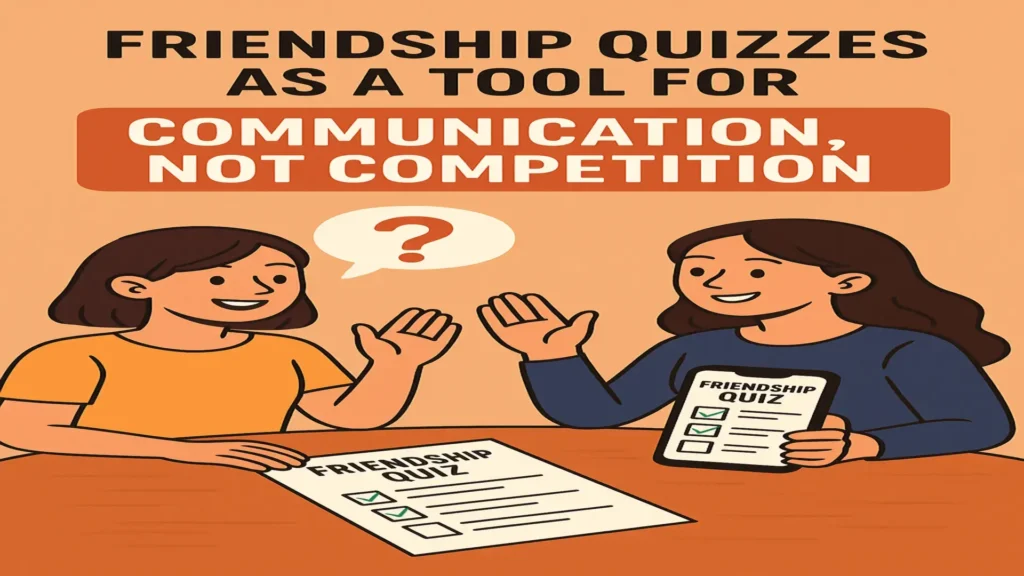
The Competition Trap: When Quizzes Become About Winning
Here’s where it gets really messy. What begins with playful, innocent fun quickly takes a turn for weird friendship ranking system.
Signs You’re Using Quizzes Competitively
You know you’ve fallen into the competition trap when:
- You are truly upset if someone else scores higher than you on a quiz about a mutual friend
- You’re writing questions and hoping that certain people will fail
- You’re comparing your score to everyone else who took it
- The number is more important than what you learned from getting questions wrong
- You don’t want to create quizzes because you are afraid nobody will score well
That last one hits differently, doesn’t it? I have seen people genuinely anxious that a low average score will “expose” them as someone who does not share enough about themselves.
Why This Hurts Friendships
You’re just making an unnecessary hierarchy when you treat a friend quiz as if it were a test you can fail. Friendships don’t have first, second, or third place. They aren’t any kind of competition with winners versus losers.
What interests me is how this competitive mindset of viewing friendships really inhibits the kind of vulnerability that creates actual intimacy. For one, if you’re afraid of “losing” in friendship, you may start to share less and ask fewer questions or, worst, seek superficial connections (easier to “win” at but, again, far less rewarding).
Reframing the Purpose: Quizzes as Conversation Starters
What’s the alternative, then? I think we need to turn how we think about these things completely around.
What Quiz Results Actually Reveal
A BFF quiz doesn’t measure the quality of the friendship; rather, it measures what you knew in that very particular moment. And honestly? The questions you get wrong are way more valuable than the ones you get right.
If your friend picks “mountains” and you guessed “beach” for their ideal vacation, that’s not a failure. That’s an opening. Maybe their preference changed. Maybe you never actually talked about it in depth. Maybe they’ve been dreaming about hiking in Colorado but haven’t mentioned it yet.
The quiz is not the endpoint; it’s the beginning of a conversation you might not have had otherwise.
Using Scores to Spark Meaningful Dialogue
Here’s what I’ve started doing, and it’s made these quizzes so much better: I treat wrong answers like conversation prompts.
Instead of feeling bad, I ask about it. “Wait, you said your dream job is a marine biologist? Tell me more about that. When did that become a thing?” All of a sudden, you’re learning something real, something a quiz could never capture.
The friends who do this well don’t even focus on the final score. They send screenshots of specific questions with messages like “Okay, I need the full story behind this answer” or “I can’t believe I didn’t know this about you!”
| Aspect | The Competition Trap (What to Avoid) | The Connection Tool (What to Aim For) |
| Focus | The Final Score/Percentage (e.g., “9/10”) | The Wrong Answers/Mismatches |
| Goal | To Prove you are the best friend. | To Discover something new about your friend. |
| View of Error | A Failure in the friendship bond. | An Opening for conversation and growth. |
| Questions | Obscure facts designed for only one person to know. | Prompts that invite stories, values, and current realities. |
| Outcome | Unnecessary anxiety, competition, and a friendship ranking system. | Meaningful dialogue, increased vulnerability, and a stronger relationship. |
| Action After | Comparing scores with other friends. | Asking, “Tell me more about the ‘why’ behind this answer.” |
How to Use Friendship Quizzes for Better Communication
If you want to use a friendship quiz as an actual tool for strengthening your relationships, here is what actually works:
Focus on Discovery, Not Accuracy
Everything that you get wrong is something new to be learned. Approach it with curiosity rather than with judgment (of oneself and of the friend).
Talk About the “Why” Behind Answers
Anyone can memorize facts, but understanding why someone chose something reveals so much more. Why is that their favorite movie? What does their dream vacation say about what they need right now?
Make Questions That Invite Stories
Instead of “What’s my favorite color?” try “What accomplishment am I most proud of?” or “What’s something I’m currently worried about?” These can’t be answered with simple facts; they require actual knowledge of someone’s inner life.
Share Your Own Answers, Too
Don’t just quiz people about yourself. Take their quizzes, but also volunteer information. “You know what’s funny? My answer to that would have been completely different last year.”
Use Mismatches as Check-Ins
If several people miss the same question, maybe that’s because you haven’t discussed that topic lately. That’s valuable information about what you may be keeping to yourself.
Creating Your Own Friend Quiz with the Right Intentions
If you’re making a bestie quiz, think carefully about what you’re actually asking and why.
The best quizzes I have seen balance surface-level fun stuff (favorite pizza topping, anyone?) with deeper questions that reveal values, dreams, or current realities. They are designed to celebrate what friends do know while gently revealing opportunities to go deeper.
Avoid questions that are set up to allow only one “right” person to get them correct. You’re not looking for that “#1 best friend” kind of thing; you’re giving those who care about you something with which to connect to who you are right now.
And maybe most importantly, be okay with people not getting a perfect score. If someone gets half the questions wrong, that doesn’t make them a bad friend. It might mean you’re both busy, or you haven’t hung out in a while, or you’re both bad at asking the deeper questions. All of those things are fixable.
Frequently Asked Questions (FAQs)
Today, we will discuss the most popular questions that can be used to test a friendship. Here are the comprehensive details:
Final Thoughts
I feel like the obsession with friendship quizzes says something sweet about us: we want to know and be known. We want some sign that we matter to the people we care about. But a number on a screen can’t give us that. Only actual communication can.
Here’s what you do the next time you take a best friend quiz: don’t even look at your final score. Scroll back through your wrong answers, and pick one to ask about. Send a message. Start a conversation. That’s where the real friendship happens (not in getting every answer right, but in caring enough to learn more when you get one wrong).
Your friendships are worth more than a percentage; treat them that way.


